Science Journalism Without Borders: Explore Fellowships, Grants, and Networks
Wednesday, 14 Oktober | 4.30 pm – 6.00 pm | Herrenhausen Palace
- Michele Catanzaro, journalist and lecturer at the Autonomous University of Barcelona, Spain
- Astrid Viciano, Vice-President of EFSJ and WPK Board Member, Germany
- Helena Rodríguez Gómez, freelance journalist, Spain [Moderator]
Are you navigating the world of fellowships, grants, residencies, and international collaborations? This workshop is your roadmap. We’ll showcase inspiring reporting made possible by these opportunities, map the key programs for Europe-based journalists, and share practical tips for crafting strong applications. Learn how these opportunities can help you build sustainable careers, strengthen independent networks, and connect with journalists across borders.
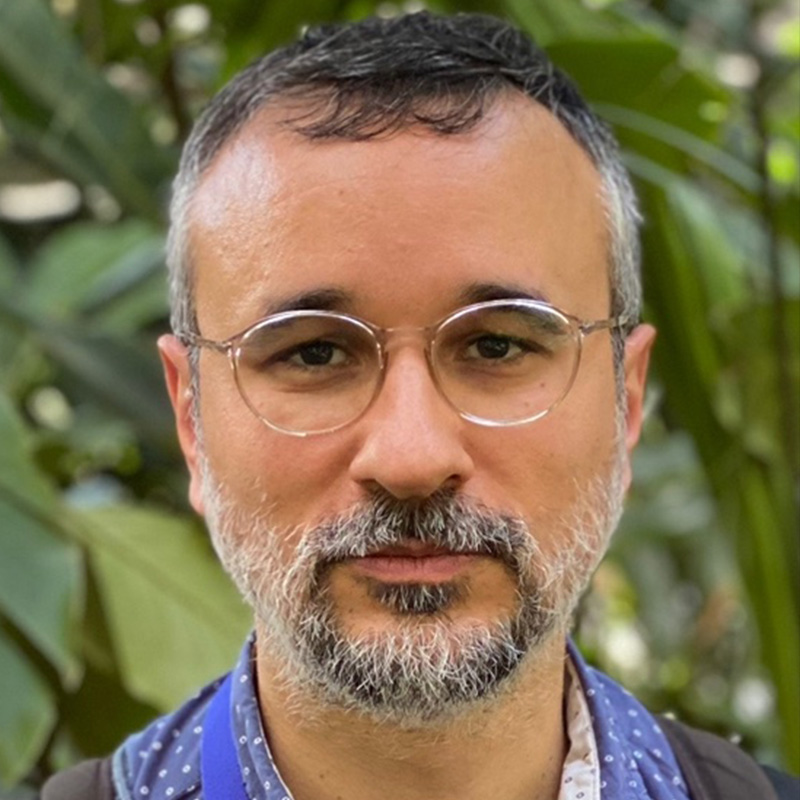
Michele Catanzaro
Michele Catanzaro (Rome, Italy, 1979) is a journalist and lecturer at the Autonomous University of Barcelona (Spain). He has a degree (Sapienza University, Rome) and a PhD (Technical University of Catalonia, UPC, Barcelona) in Physics. He has worked since 2001 as a freelancer, writing mainly about science, environment, and health for outlets like Nature, Science, El Periódico, and others. He is co-author of the book „Networks: A Very Short Introduction“ (Oxford University Press, 2012) and of the documentary „Fast Track Injustice: The Óscar Sánchez Case“ (2014), which received the Golden Nymph Award in 2015. His work has also been recognised by other awards: King of Spain International Journalism Prize; European Science Writer of the Year 2016; BBVA Innovadata; Valors; Prismas; Holtzbrink; Colombine; Boehringer-Ingelheim. He has coordinated projects funded by the Journalism Fund, the Journalism Grants, and the Climate Investigation Grants. He has been director and scriptwriter for RTVE (the Spanish public television) and BarcelonaTV. He teaches science and health journalism at the Autonomous University of Barcelona (UAB). He coordinates the PerCientEx project on excellence in science journalism and is part of several research projects: ENJOI, IA-COM, NARRAR. He has been a member of the board of the Catalan Association for Science Communication. He has been a Journalist in Residence at the Heidelberg Institute for Theoretical Studies and a Nature-Marsilius Invited Professor at the Marsilius Kolleg (University of Heidelberg).
Photo: Yorley Ruiz

Astrid Viciano
Astrid Viciano is a Spanish/German journalist and medical doctor who has worked as a staff reporter at Süddeutsche Zeitung, Die Zeit, Focus and stern in Germany. Today, she is the senior editor of the German Health News Review (medien-doktor.de), and works as a freelance investigative science reporter, mostly in cross-border investigations, with stipends from Journalismfund, IJ4EU, the Peter-Hans-Hofschneider grant and others. In 2003, she worked for the newspaper Reforma in Mexico City. From 2012 until 2016, she worked as a freelance reporter from Paris, and from 2009 to 2011, she did a master’s in Specialised Journalism at Annenberg School in Los Angeles (award for academic excellence). She has published articles in German, English, French, Dutch, and Spanish. Viciano has won numerous journalism awards, grants, and fellowships. Her book on science history („Die Formel des Widerstands“, Galiani) was on the longlist for the science book of the year 2025 in Austria.
Photo: Ute Hieke

Helena Rodríguez Gómez [Moderator]
Helena Rodríguez Gómez is a freelance investigative journalist from Barcelona specialising in collaborative cross-border investigations. She mostly focuses on issues related to climate and environmental harm and human rights violations, and how corporate interests can impact the aforementioned. Rodríguez has co-coordinated projects funded by Journalismfund, IJ4EU, Earth Journalism Network and Free Press Unlimited. Her work has been published in publications such as Climática, Follow The Money, Diari Ara, Al Jazeera, El Salto, IRPI Media, Reporterre or Mediapart, and her reporting has led her to engage with scientists such as ecotoxicologists, geologists, ecologists, or marine biologists. Lately, she is working on the opaque global waste trade and its impacts, the militarised conservation of natural areas in countries of the Global South, and the extraction of critical minerals in protected areas and its impact on biodiversity. Helena has also participated in investigative journalism conferences such as Dataharvest 2026 and has taught journalism courses at the Autonomous University of Barcelona. She holds an MA in Journalism, Media and Globalisation from the University of Amsterdam, where she specialised in Political Communication.